The journal
Bamboo, rattan and raffia: what is the difference?
These woven materials have different botanical origins. Learn what to check on an individual accessory listing.
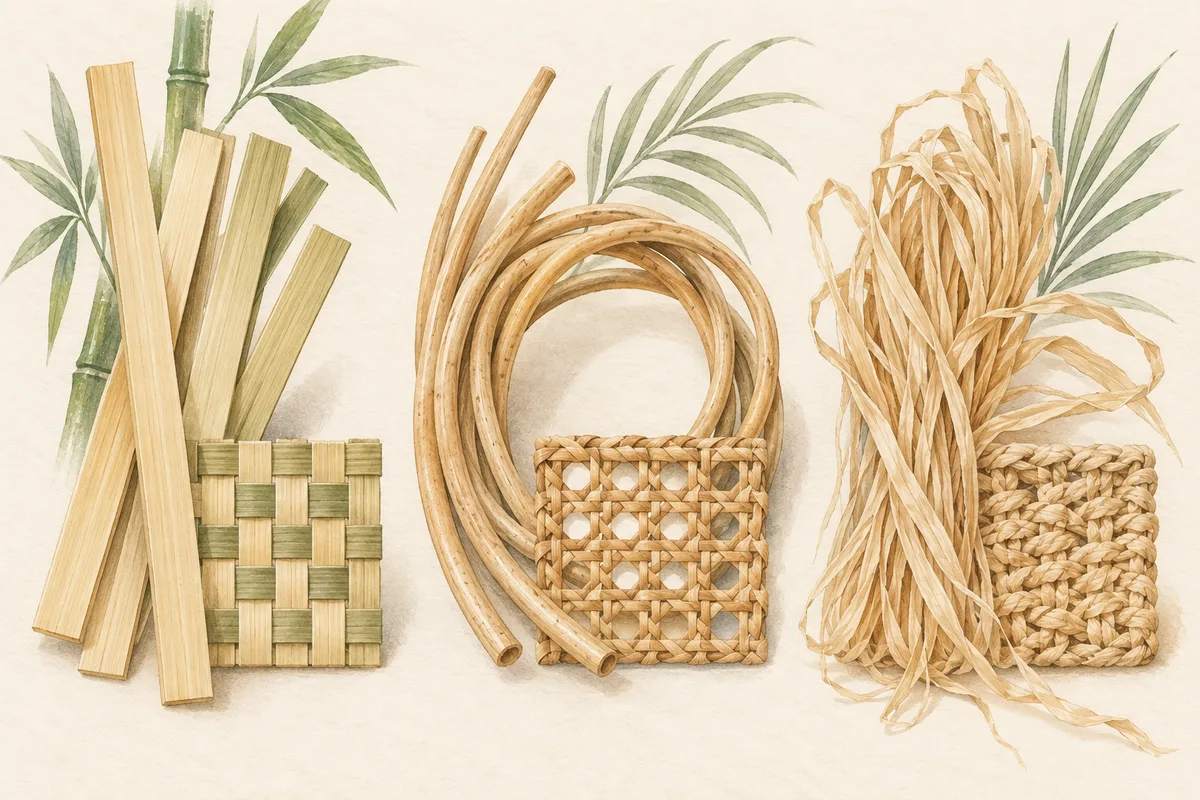
At a glance
Bamboo is a grass, rattan comes from climbing palms, and raffia comes from palms of the Raphia genus. These names describe different plant materials, not interchangeable weaving styles. A woven accessory can combine several materials, so check the composition of each component on its product page.
Three names, different plants
Bamboo belongs to the grass family. Rattan comes from climbing palms, whose flexible stems are used for woven goods. Raffia refers to palms of the Raphia genus. These are material names, not interchangeable labels for the same weave or colour.
A woven look is not a material certificate
Photographs can show colour, texture and shape, but they cannot establish a fibre’s identity on their own. A bag may also combine a bamboo body with fabric, wood, rattan or other details. Judge each part by the supplied composition on the individual product page, not a broad category label.
How KineTimber labels its pieces
Our earrings and hair ornaments are listed with natural bamboo woven bodies according to supplied specifications. Bag compositions vary by design and are shown separately. We do not rename bamboo as raffia or rattan to capture a broader search term, and we do not describe an unverified component as a particular material.
What to check before choosing
Read the material field, the measurements and the care notes on the individual product page. If a particular lining, handle or fitting matters to you and is not clearly specified, ask us with the WB, ER or HP reference before ordering. A clear answer is more useful than a guessed material name.
Put the guide into practice
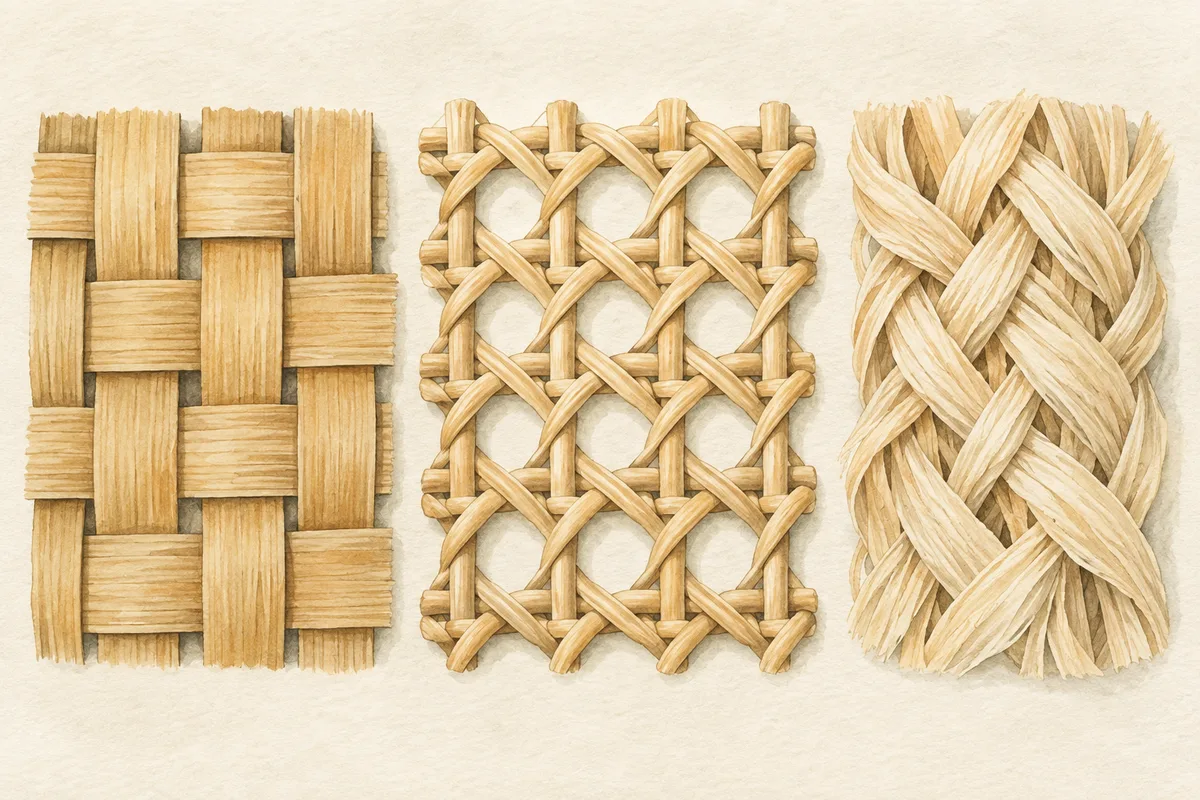
Separate the plant name, the processed material and the finished accessory. The swatches illustrate common forms, not a reliable identification test: processing, colour and mixed construction can change appearance. Kew’s botanical references below establish plant identity; the individual product specification establishes what a KineTimber item is made from.
- Read the material list rather than relying on a colour or woven texture.
- Check body, lining, handles and metal findings as separate components.
- Ask for clarification when a seller uses only a broad term such as natural fibre.
| What to examine | How to interpret it |
|---|---|
| Bamboo | Grass family; often represented here as flat strips. |
| Rattan | Climbing palms; cane is illustrated here as rounded strands. |
| Raffia | Raphia palms; illustrated as soft ribbon-like fibres. |