The journal
Bamboo accessories and sustainability: what can we really say?
Bamboo is a promising plant material, but a bag or earring has more than one ingredient and a wider journey. An evidence-led guide to better choices.
At a glance
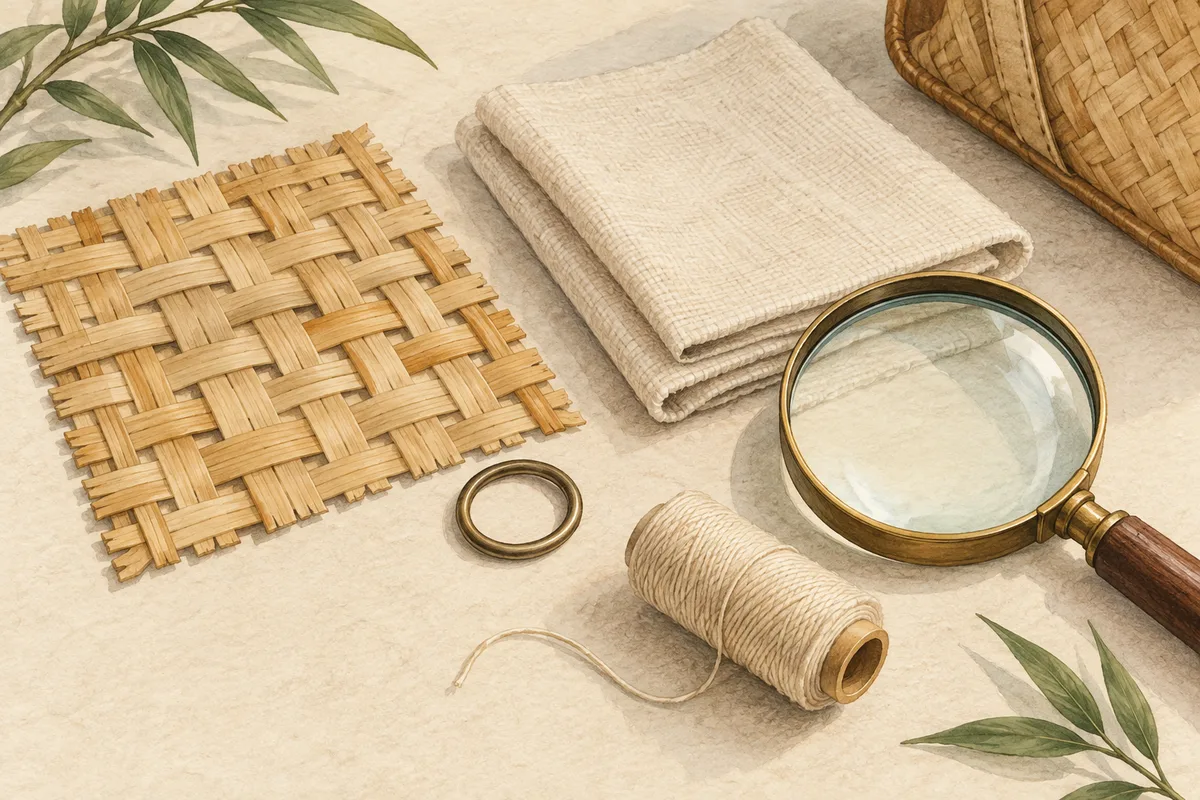
Bamboo alone does not establish that a finished accessory is environmentally friendly. Its other materials, manufacturing, transport, useful life and disposal also matter. KineTimber has not measured the full life cycle of these products; assess the complete item rather than treating bamboo as a sustainability certificate.
The promise begins with the plant
Bamboo is a grass, and some species grow quickly and regenerate from their roots after harvest. That can make it a useful renewable material when it is managed responsibly. But growth rate alone does not tell us how the bamboo in a particular KineTimber bag was grown, harvested or processed. We do not turn a botanical characteristic into a certification for a finished product.
A finished accessory has several materials
The woven body may be bamboo while a bag also has fabric, wood, lining, coating or other fittings. Earrings in this collection use hypoallergenic alloy hooks; hair ornaments have their own construction. Dyes, adhesives and finishes matter too. Without verified information on every component, it would be misleading to call the whole accessory plastic-free, biodegradable or compostable. Check the materials listed for the individual style.
Handwork is not a carbon calculation
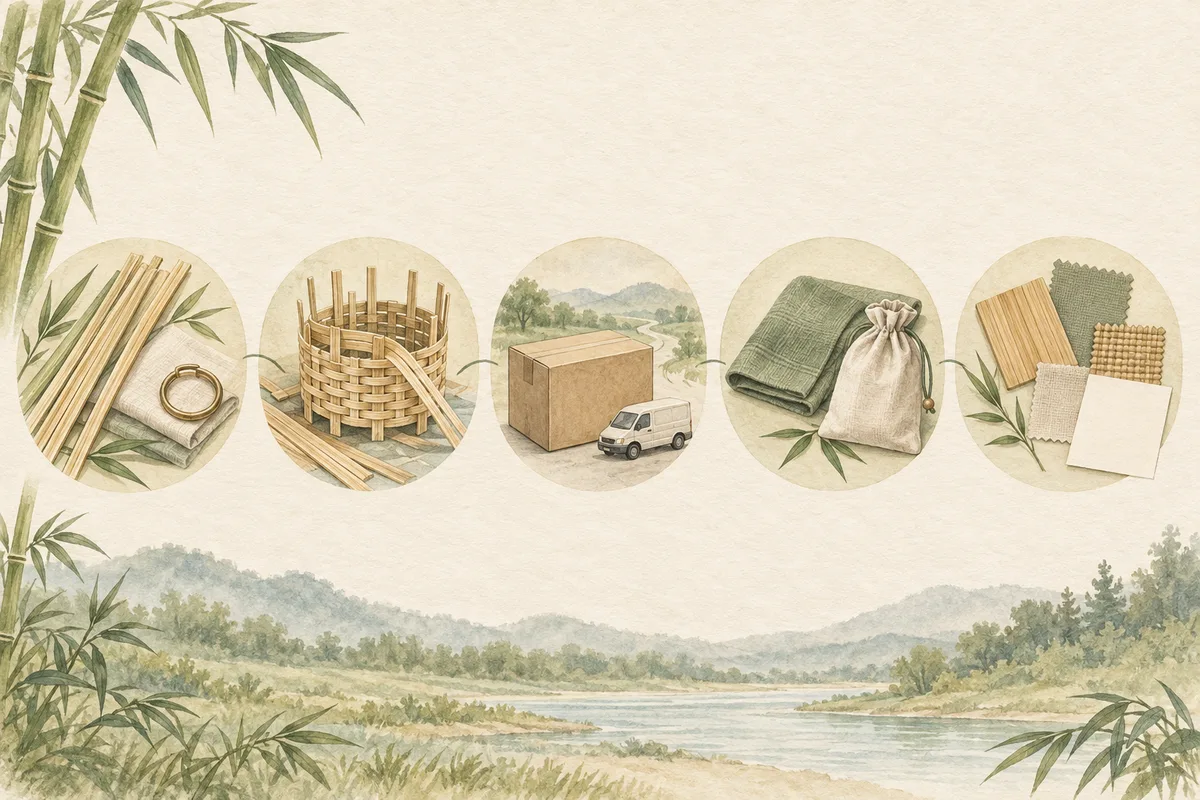
Manual weaving can rely on hands and simple tools, yet preparing, colouring, assembling, packaging and shipping a product also use resources. We have not measured the full life cycle of these accessories or compared their emissions with PVC, PU, nylon or metal alternatives. So we do not promise that every handwoven item has lower emissions, stores a verified amount of carbon, or replaces plastic in your own use.
Care is a practical choice
Choose a shape and size you expect to use, then care for it according to its materials. Keep woven bamboo dry, away from prolonged sunlight and heavy pressure; wipe it gently and store it separately. A bag can be stuffed to keep its shape. Using an item longer may help avoid an early replacement, although no precise environmental saving has been calculated for this collection.
Put the guide into practice
A useful environmental question names the product, the claimed benefit and the supporting evidence. A statement about bamboo growth is different from a measured claim about a finished bag. The European Commission’s resources below explain why substantiated claims and life-cycle context matter; they do not certify KineTimber products.
- Read the complete material list, including fabric, hooks, lining and finishes where specified.
- Ask whether a claim concerns one material, the whole item or a measured comparison.
- Follow care instructions and check local disposal guidance; do not assume mixed materials are compostable.
| What to examine | How to interpret it |
|---|---|
| Plant characteristic | Does not establish the finished item’s footprint. |
| Product claim | Needs evidence specific to its scope and components. |
| KineTimber’s boundary | No full product life-cycle assessment or quantified savings are claimed. |