The journal
How handwoven bamboo accessories take shape
From prepared strips to a finished weave: a clear look at common bamboo-working steps and the details that differ by design.
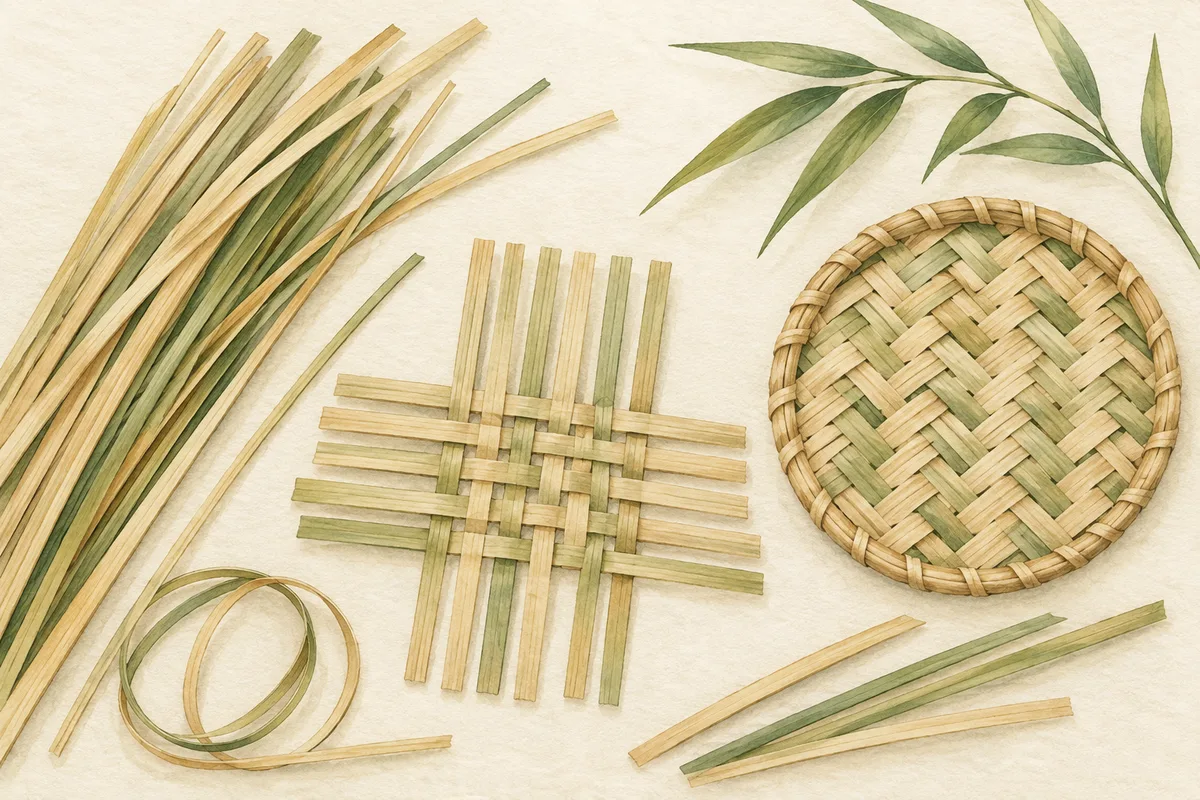
At a glance
Bamboo weaving commonly involves preparing strips, interlacing them into a pattern, shaping the piece and finishing its edges and components. The sequence and materials vary by design. This guide explains common processes; it does not document a verified workshop process for every KineTimber item.
A strip begins the story
A bamboo culm can be cut and divided into narrower strips. For weaving, makers work toward strips with a thickness and width suited to the intended pattern; uneven material changes how closely the lines can sit together. This describes a common craft method, not a verified record of every KineTimber supplier’s tools or workshop.
Preparing before weaving
Drying and conditioning help makers handle bamboo strips. Some designs use colour before the strands are arranged; methods and finishes vary. Our supplier-described process also mentions steaming, sun-drying and dyeing for certain pieces, but a photograph cannot prove which steps, dyes or treatments were used for an individual item. Read its material information rather than assuming all styles follow one recipe.
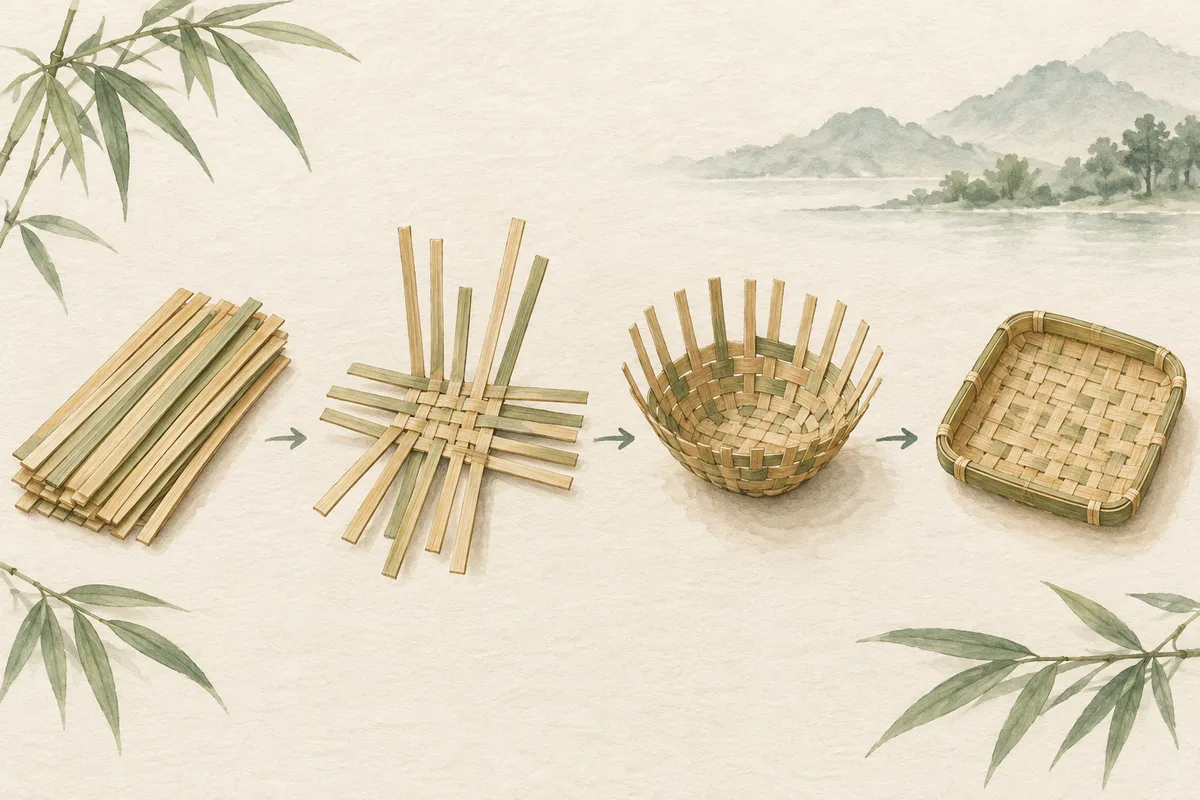
The pattern is built by hand
In manual weaving, strips pass over and under one another. The spacing, angle and tension create a flat field, a curve or an open pattern. Look at a bag’s edge, an earring’s silhouette or a hair ornament’s crossing lines: each design uses the weave differently. Slight variation can be part of handwork, but it is not proof of a particular maker or a guarantee about durability.
Finishing depends on the piece
A bag may add handles, lining or trim; earrings need hooks, and a hair ornament relies on its own wearable structure. These parts are not automatically bamboo. KineTimber’s listed earring hooks are hypoallergenic alloy, not sterling silver or 316L steel. Compare the individual product photographs, measurements and material list before ordering; we do not claim to make or design the supplied collection ourselves.
Put the guide into practice
The sequence helps explain the vocabulary used in a woven-product description. It is not a DIY recipe or proof that every KineTimber item passes through an identical workshop. Strip preparation, colour, assembly and finishing can differ. Ask for evidence about the specific item when its maker, location or production method matters to your purchase.
- Distinguish the woven body from components attached after weaving.
- Inspect photographs of the edge, joins and reverse, not only the front pattern.
- Treat process illustrations as explanations; request documented production details when needed.
| What to examine | How to interpret it |
|---|---|
| Preparation | Strips are prepared for the intended design; details vary. |
| Weaving and shaping | Interlacing builds the pattern; shaping establishes the form. |
| Finishing | Edges and additional components need their own inspection. |