The journal
Does a shoulder strap make a woven bamboo bag suitable for crossbody wear?
Check strap length, measurement endpoints, adjustment range and attachment points before choosing a woven bag for crossbody wear. Unknown fit stays unconfirmed.
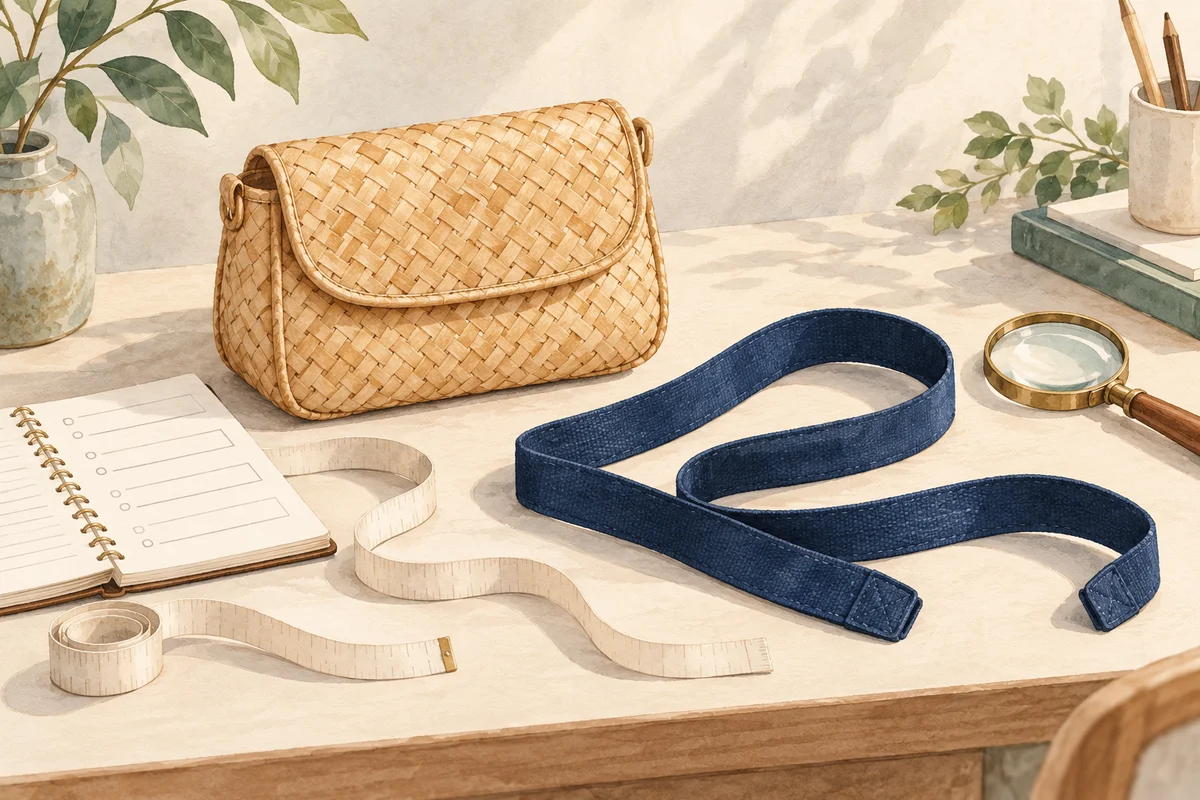
At a glance
No. A shoulder strap alone does not confirm crossbody suitability. Check the exact bag’s intended carrying method, whether the required strap is supplied, its measured length and adjustment range, and its original attachment points. Compare those details with a bag you already wear in the intended position, allowing for your clothing and the different bag shape. WB-11’s public description mentions a long strap, but no strap measurement or verified crossbody fit is published in the details checked here. Keep that fit unconfirmed until the missing information is resolved.
How do shoulder carrying and crossbody carrying differ?
For shoulder carrying, the strap normally rests on one shoulder and the bag hangs on that side. For crossbody carrying, it passes from one shoulder toward the opposite side of the torso. That different route changes the length needed to reach your chosen position. A product title saying shoulder bag, or a description saying long strap, does not supply a measurement or guarantee that route will work for you. State your intended carrying method before comparing products. The general bag-selection guide covers shape and materials; this checklist concentrates on the strap information needed for that decision.
What does KineTimber actually confirm about the candidate bag?
WB-11’s public product text describes a long strap and a vertical silhouette. Its listed 10 × 3.5 × 18 cm measurement describes the bag body, with height excluding the handle; it is not the strap length or drop. The checked text does not give a numerical strap length, adjustment range, removable-strap specification or confirmed crossbody fit. WB-03 is described as a frame tote, but its checked text gives no strap specification: this absence does not prove that a particular fitting is supplied or absent. Compare published evidence, then ask about the exact reference and version rather than filling gaps from photographs.
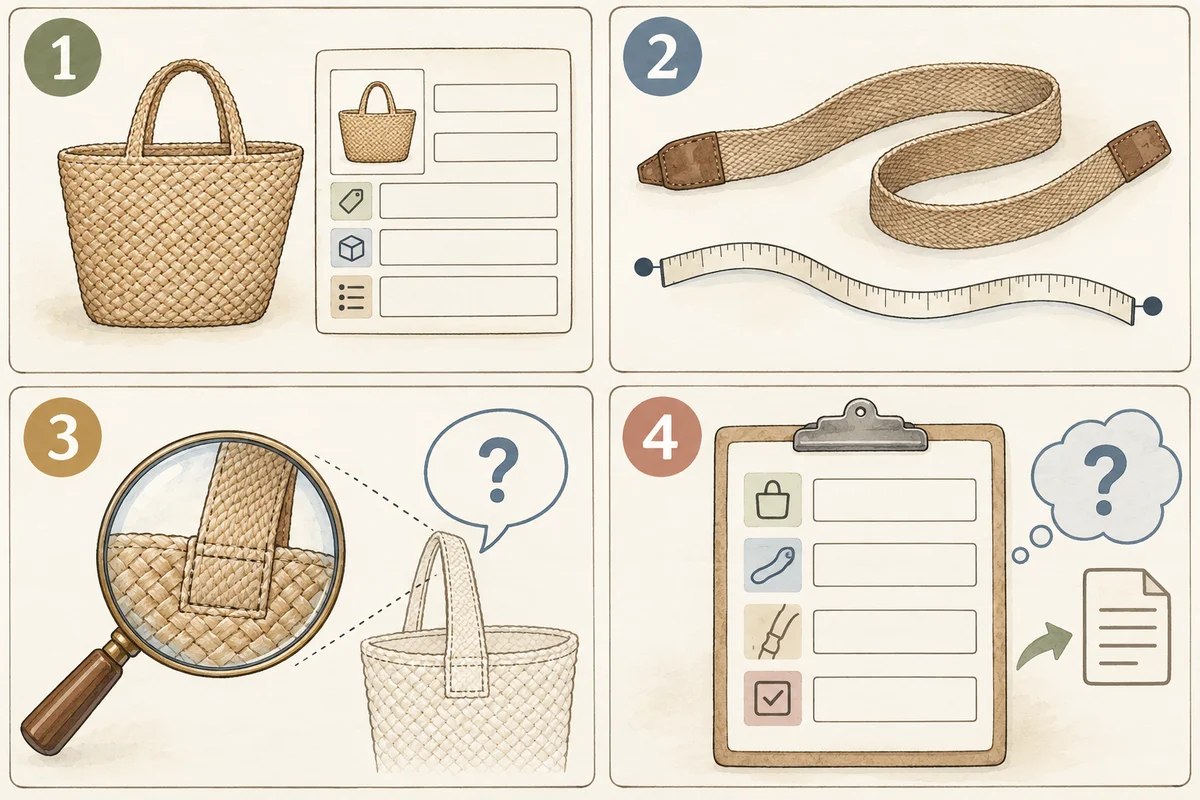
Which strap measurement should I request?
Ask whether a quoted number means total strap length or strap drop. For total length, request the measurement along the strap between clearly identified endpoints and ask whether hooks or other end fittings are included. Drop usually describes a vertical distance from the top of the supported strap to the bag’s top or attachment level; ask which baseline and setup the merchant used. Keep a simple labelled sketch with the answer. Do not double a drop to invent a total length: bag width, attachment positions and the measurement setup can differ. Keep units consistent when comparing.
Does adjustable or removable mean the strap will fit me?
No. Adjustable describes a way to change length, while removable describes whether the original strap can be detached as designed. Neither word supplies the shortest and longest usable settings. Request both limits using the same endpoints, plus whether adjustment is continuous or uses fixed positions. KAYU’s Jen page describes an optional crossbody chain; Kayu & Co’s Circa page explicitly describes an adjustable strap for shoulder and crossbody use. These are different merchants and materials. Their wording illustrates which questions to ask, and supplies no strap feature or fit evidence for a KineTimber bag.
How can I compare the length with a bag I already use?
Choose a bag you already wear crossbody at the position you want, over clothing similar to your planned outfit. Record its strap setting, measure between identified endpoints without stretching, and note where its top and base sit. This is a personal reference measurement, not a recommended length for everyone. Compare the candidate only when the measurement definitions match; a different body height or attachment location can change where it hangs even with a similar strap length. Your height alone cannot settle fit. If the merchant supplies no comparable measurements, leave the comparison open.
Which original attachment points should I ask about?
Ask for clear views of both ends of the original strap and where they meet the bag, identified as the same model and version. Ask whether each connection is fixed or designed to detach, and whether the described strap and end fittings are supplied together. A decorative loop or woven handle is not evidence of an approved strap anchor. Photographs help identify visible parts, but cannot establish a tested carrying load or long-term strength. Do not add aftermarket hooks, tie a strap through the weave or modify handles to obtain a carrying method that has not been confirmed.
What can photos and a first position check tell me?
A model photograph can suggest a carrying position, but gives neither your strap setting nor a measurement. An AI editorial diagram provides no actual product-fit evidence. Once the original carrying arrangement is confirmed and you have the item, follow the merchant’s instructions for a gentle position check without added load; stop if a connection appears damaged or the setup is unclear. Note where the bag sits when standing and sitting, and whether the opening is accessible. These observations do not establish comfort over time or a permitted load. Use the separate clothing-contact guide for delicate garments.
What should my final question to the merchant include?
Use the worksheet to send one specific question: “For WB-11 in this version, is the described strap supplied and intended for crossbody use? Please confirm total length, measurement endpoints, shortest and longest settings if adjustable, and both original attachments.” Add your reference bag’s measurements and desired position if you want a meaningful comparison, keeping that personal example separate from the merchant’s specification. Save the dated answer with its source. If a required detail remains unanswered, keep crossbody suitability unconfirmed and choose whether to wait or consider another documented design. Do not convert an unanswered question into a positive fit claim.
Put the guide into practice
Make one strap-and-attachment record per exact bag version. Copy the measurement definition as well as the value, identify the evidence and date, and write unknown for unanswered details. The example is a purchase worksheet, not a strap measurement, personal fitting service or load test.
- Identify the exact bag and confirm the intended carrying method and supplied strap.
- Record length definitions, units and any shortest-to-longest adjustment range.
- Check both original attachment points and compare with your own reference bag.
- Save the dated evidence and resolve required unknowns before deciding.
| What to examine | How to interpret it |
|---|---|
| Exact item and intended use | WB reference + version: ____; shoulder / crossbody: ____; page + date: ____. |
| Strap supplied and intended carrying method | Confirmed wording: ____; included / optional / unknown: ____; merchant answer + date: ____. |
| Length or drop and its measurement definition | Value + unit: ____; endpoints / baseline: ____; end fittings included: ____; source: ____. |
| Adjustment range and removability | Shortest: ____; longest: ____; same endpoints: ____; fixed positions / continuous / unknown: ____; removable: ____. |
| Both original attachment points | End A + view/source: ____; end B + view/source: ____; fixed / designed to detach / unknown: ____; supplied fittings: ____. |
| Personal comparison and unresolved decision | Reference bag setting + measurement: ____; clothing + desired top/base position: ____; incomparable detail: ____; unanswered question: ____; decision: ____. |