The journal
Can a bamboo bag get wet, and how should you dry and store it?
Follow a gentle rain-care checklist for a bamboo bag: check mixed materials, blot surface water, air-dry in shade and store only when dry.
At a glance
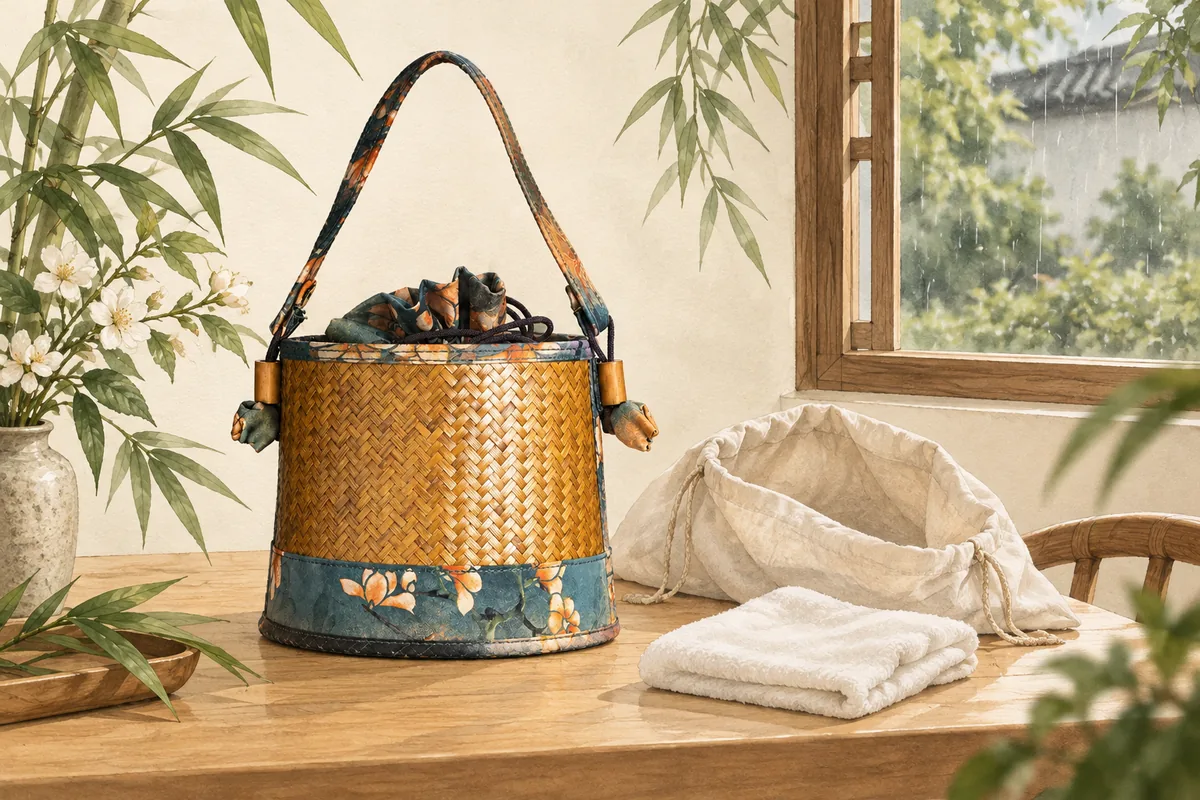
A woven bamboo bag should not be soaked or washed. If rain catches you, take out the contents, gently blot surface water with a dry cloth and air-dry the bag in the shade. Check the lining, handles and woven body separately; store it only when all accessible parts are dry.
Can I use a bamboo bag as a waterproof rain bag?
Do not plan around waterproof protection: KineTimber’s bag care asks you to protect the bag from moisture. An accidental splash is different from choosing it for a long wet journey. For a forecast of persistent rain, choose a bag whose waterproof performance is documented for your intended use. If you already have your woven bag with you, move it under cover and keep it away from dripping umbrellas or wet ground. A dry-looking outside does not confirm that fabric or joints inside stayed dry.
What should I do after a splash or a thorough soaking?
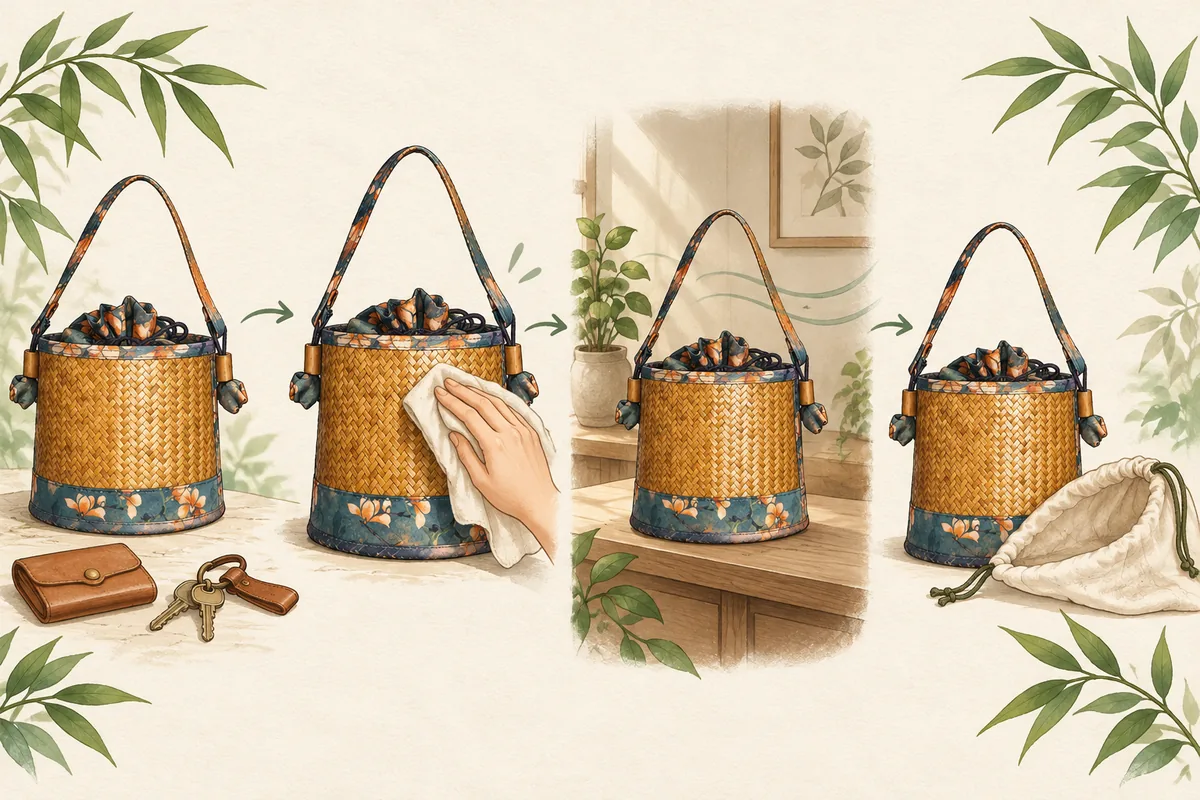
First empty the bag and gently blot visible surface water; do not scrub, twist or squeeze the weave. After a small splash, check the wet area and the corresponding inside surface. After heavier rain, also check the bottom, fabric folds and handle connections for dampness or visible changes. Place the bag on a clean, dry surface with room for air around it. Keep wet contents elsewhere while the bag dries. These are gentle first steps, not a treatment that guarantees recovery after immersion or damage.
Why should I check the woven body, lining and handles separately?
A bamboo bag can combine several materials, so a fabric panel does not make the complete bag washable. The catalog lists WB-18 as natural bamboo and textile, while WB-03 combines natural bamboo and natural wood. Other styles include PU or rattan. Those material fields do not establish that a lining is removable, that handles can be detached or that one component may be machine-washed. Look at the individual product and care page before cleaning. For everyday surface dirt, the confirmed routine is a dry cloth or soft brush, used gently.
Can I speed up drying with a hairdryer, radiator or strong sun?
Use shade and natural airflow, following KineTimber’s existing care instructions; do not add a heat-drying method. Avoid a radiator, hot hairdryer and strong direct sunlight, and do not bend the bag to open up a damp seam. Leave the opening accessible as its existing construction allows, without pulling a fixed lining or forcing a closure. The care information does not specify a drying temperature or a number of hours. Check the condition again before use instead of setting a deadline that may not suit the materials or the room.
How can I check the bag before putting it away?
Check all accessible parts, not just the outside weave: the base, inner fabric, folds and handle joints may need a separate look. If you still find dampness, leave the bag to air-dry and check again. Once dry, lightly fill it to retain its shape and use a dust bag with desiccant, as the care page recommends. Do not force in so much filling that it stretches the opening. Keep the bag away from pressure, scratches and damp storage. A dust bag and desiccant are storage aids, not proof of mould resistance.
Should I use oil, bleach or other chemicals for an odour or stain?
Do not improvise a chemical treatment. The confirmed routine is gentle cleaning with a dry cloth or soft brush and shaded air-drying after dampness; it does not authorise bleach, solvents, oils, steam or a soap bath. If an odour remains, a stain is not removed by the stated routine, or you notice visible growth, a split or deformation, stop experimenting and document the condition. Do not assume that a cleaning recipe for a different brand, a solid wooden object or an unlined basket applies to this mixed-material bag.
What information is useful if the bag changes after getting wet?
Keep the WB reference and record where the bag became wet, which parts were affected and what you did afterwards. Take a clear overall photograph and a close-up of any changed area, without pulling a loose part to make it more visible. Say whether the bag is still damp, dry, misshapen or split. This makes a care question specific to the item instead of asking only whether bamboo tolerates water. Where damage is visible, pause use while the condition is assessed; do not try to hide it with glue or a coating.
Put the guide into practice
Use this rain-care record at home. Write the WB reference and the affected parts, then record each check as wet, dry or uncertain. An uncertain entry means more checking is needed, not permission to pack the bag away.
- Empty the bag and separate wet contents.
- Gently blot surface water with a dry cloth; avoid squeezing the weave.
- Air-dry in shade with space around the bag, then recheck accessible parts.
- When dry, fill lightly for shape and store in a dust bag with desiccant.
| What to examine | How to interpret it |
|---|---|
| Small splash | Affected outer spot and its inside face: ____ |
| Heavier rain | Base, fabric folds and handle joints: ____ |
| Before storage | Accessible parts dry; any remaining odour or change: ____ |